Collection Note 02 - Strong Super Trouper Carbon Arc Followspot (1974)
An exploration of the 1974 Strong Super Trouper Carbon Arc Followspot — a remarkable survivor from the final flourishing of carbon arc stage lighting. Drawing on surviving equipment, technical sources, and practitioner knowledge, this note examines the Super Trouper’s origins, operation, distinctive beam, and the operator craft that kept this iconic followspot alive.
CARBON ARC
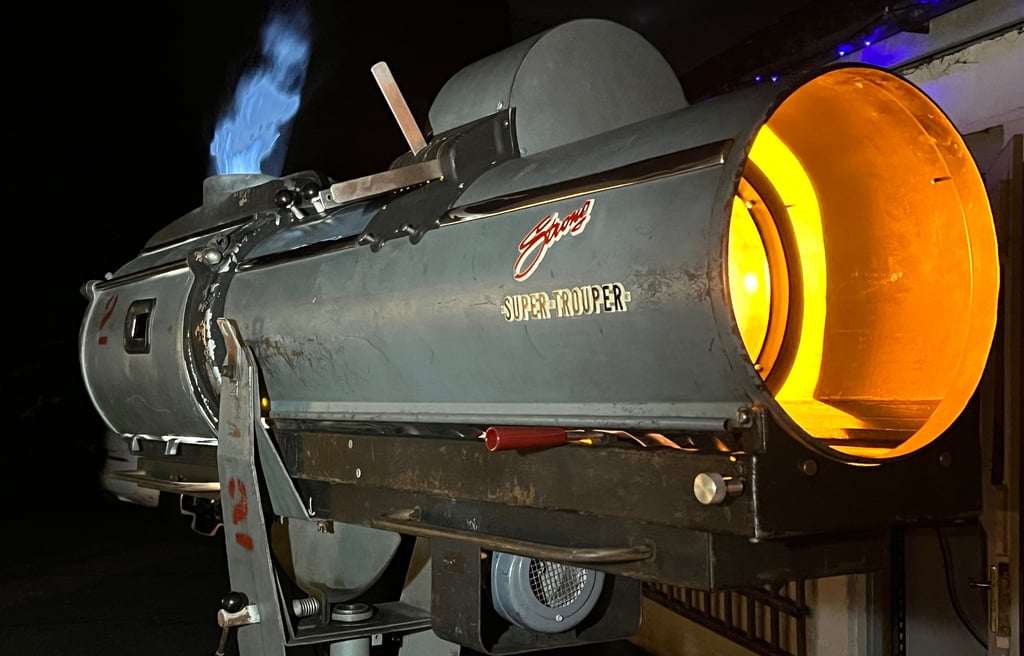
Figure 1, 1974 Strong Super Trouper carbon arc followspot, front view. HSLC collection.
A followspot that became an icon
Few stage lighting instruments have achieved true global name recognition, but the Super Trouper from the Strong Electric Company is one of them. Its fame was sealed not only by decades of service in theatres, arenas, and television studios, but also by popular culture itself, immortalised in the 1980 hit Super Trouper by ABBA. (Amusingly, the music video features a CCT 1 kW CSI, Compact Source Iodide, followspot rather than a Strong, but the association stuck, and the name became iconic.)
Origins in Cinema Projection
The Super Trouper’s lineage reaches back to the early 20th century and the work of Harry Strong, founder of Strong Electric. Before the company became synonymous with high-powered followspots, Strong was a major manufacturer of carbon arc lamps for cinema projectors. Projectionists in small and mid-sized cinemas of the 1940s would instantly recognise the DNA in the Super Trouper’s lamphouse: the same rugged construction, the same unmistakable arc chamber, and the same philosophy of reliability above all else.
In 1956, Strong adapted this expertise into a dedicated theatrical followspot, and the Super Trouper would become one of the most widely used high intensity followspots in North America and internationally. In 1971, Strong introduced a xenon version of the Super Trouper, ushering in a new era of lamp technology for the company. Yet carbon arc models like the Super Trouper continued to dominate through the 1970s and into the early 1980s, prized for their intense, cool-white beams and the artistry required to operate them.
A 1974 Survivor
This example in the collection dates from 1974, placing it at the crossroads of tradition and innovation, still a carbon arc unit, but produced just as xenon was beginning to take hold.
Strong offered the Super Trouper in both 240V and 115V configurations. Ours is the 115V model, strongly suggesting that it began its working life in the United States.
In operation, the 115V AC supply did not power the arc directly. Instead, it fed a substantial external rectifier unit which converted the supply to direct current. Carbon arcs exhibit what physicists describe as “negative resistance”, as the arc becomes hotter, it allows more current to flow. Without regulation, this would cause the current to run away uncontrollably, potentially damaging the carbons or the lamphouse itself.
For that reason, these followspots required a ballast or rectifier assembly, a heavy, industrial piece of equipment designed to stabilise and “choke” the current to a controlled operating range.
Carbon arc Super Troupers of this era typically operated in the region of 45 - 65 amps DC, with arc voltages generally around 35 - 45 volts across the carbons, depending on trim and configuration. This equated to roughly 1.6 - 3 kilowatts sustained at the arc itself. Larger fixed cinema lamphouses often ran at higher currents, 70 amps and above - but touring followspots were usually specified at slightly lower operating levels to suit venue power and portability requirements.
Even at these levels, the output was formidable.
A Beam That Has Seen It All
One of the irresistible qualities of a followspot is its anonymity: it illuminates the star while remaining unseen itself. That makes the history of any surviving unit tantalisingly mysterious. Since 1974, this Super Trouper may have tracked rock legends across arena stages, picked out Broadway leads in their final bows, or followed comedians, dancers, and dignitaries under the heat of its carbon arc.
The Super Trouper was commonly used for throws exceeding 200 feet and, under favourable conditions, could project well beyond that in large auditoria and arenas. This performance was made possible by a precision ground-glass reflector, typically around 14 - 16 inches in diameter, designed to position the carbon crater precisely at its focal point. When correctly centred, the result was an exceptionally even, high-intensity field, one of the reasons Strong followspots earned such loyalty.
What made that beam so distinctive was not just its reach, but the nature of its source. Unlike later xenon models, this Super Trouper generates light by sustaining a high-current DC arc between two carbon rods. The arc itself, an intensely bright, almost living point of light, sits precisely at the reflector’s focal point.
High-intensity carbons were not simply solid graphite. The positive rod typically contained a rare-earth cored centre, often incorporating cerium compounds, which vaporised under load to produce a superheated plasma. The positive carbon would form a deep, cup-shaped “crater,” and it was this crater, glowing white-hot, that acted as the principal light source.
With a colour temperature typically in the region of 5,200 - 5,600 Kelvin, the carbon arc produced a daylight-balanced beam remarkably close to natural sunlight. Skin tones appeared natural, colours rendered cleanly, and the beam possessed a subtly organic quality, not unstable, but alive, something many veteran operators still recall.
That brightness could not be dimmed electrically. Instead, light was shaped mechanically through the iris, douser, and shutters. The operator was not merely pointing a light, they were sculpting it.
Every scratch on its casing and every adjustment mark on its yoke hints at decades of hands guiding it, aiming it, and trusting it to deliver that unmistakable, razor-edged beam.
Inside the Lamp House
At the heart of the 1974 Super Trouper sat the carbon arc, two consumable electrodes slowly burning away as they produced their intense white light. Typically, a larger positive carbon and a slightly smaller negative were mounted in opposing holders, fed together by a motorised mechanism that maintained the critical arc gap.
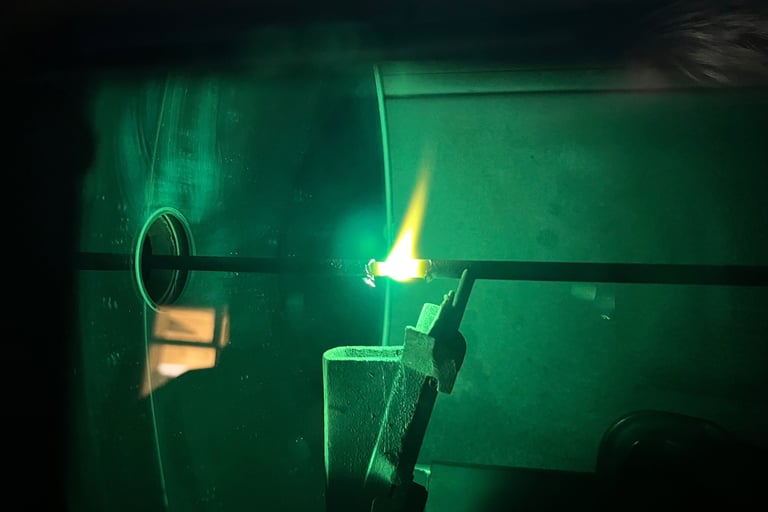
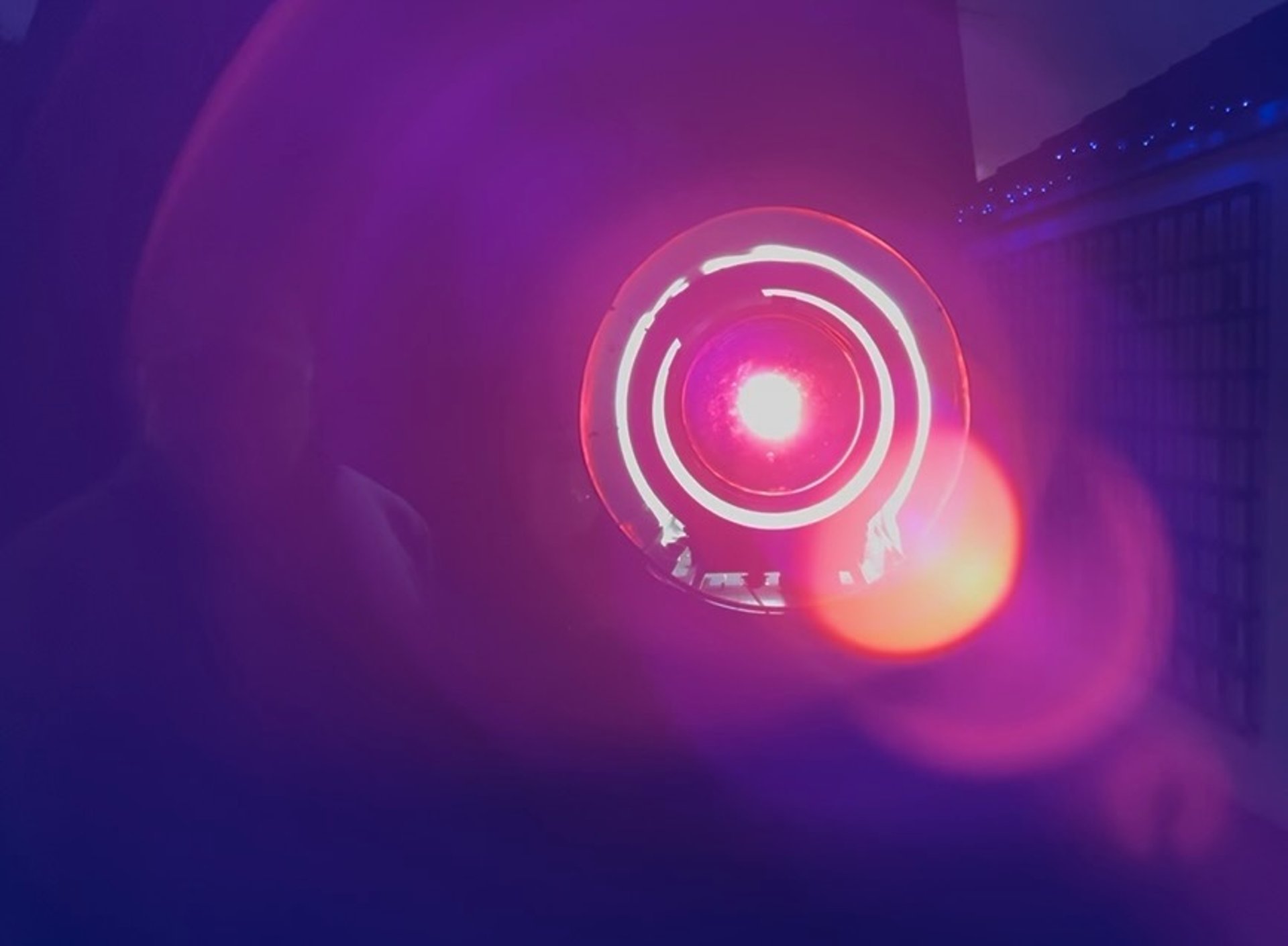
Figure 2 - View through the lamphouse inspection glass, showing what the operator would observe during operation.
Striking the arc required a practised touch. The rods were brought together momentarily to initiate the arc, then eased apart to establish a stable burn. From that point on, the feed system compensated for the steady erosion of the carbons, but it was never entirely “hands off.”
At full trim, carbons would steadily erode over the course of a performance, often providing approximately 40 - 60 minutes of reliable runtime depending on current and adjustment. Running low mid-show was not an option. Experienced operators learned to read the burn rate instinctively, timing carbon changes around intervals or scene breaks.
And this was not a clean, clinical process.
Carbon arc operation was, quite simply, a dirty job, and those who did it knew it.
Fine white carbon ash, known simply as “snow”, accumulated inside the lamphouse and around the feed mechanism. It required regular clearing to prevent contamination of the optics and mechanical components. A small brush or rag was rarely far from reach. Hands became blackened from handling fresh carbons. Clothing carried traces of graphite dust long after the show had finished. Heat build-up was constant, and a faint smell of ozone often lingered in the booth.
The arc itself produced significant ultraviolet radiation. Without the darkened inspection porthole glass in place, prolonged viewing could result in “arc eye”, a painful condition familiar to welders. Operators were careful, disciplined, and respectful of the flame they were tending.
Carbon arcs also generated carbon monoxide and nitrogen oxides, necessitating a dedicated exhaust chimney or extraction system above the lamphouse. In cramped followspot booths or gallery positions, ventilation was not optional, it was essential.
Life in the Spot Box
While followspotting, the operator remained acutely aware of what was happening inside the lamphouse. Between cues, sometimes even during a long musical number, they would glance through the coloured inspection port, checking that the crater on the positive carbon was forming correctly and that the arc remained centred in the reflector. A wandering arc meant reduced intensity or an uneven field.
The lamphouse was not merely a housing; it was an active, temperamental system requiring attention, judgement, and mechanical sympathy.
Earlier carbon-arc equipment could be even more demanding. Before motorised or automatic feed mechanisms became more widely used, the operator had to maintain the arc manually, judging the gap and the burn continuously by hand and eye. Later followspots such as the Super Trouper reduced some of that labour, but they still demanded vigilance, experience, and careful judgement.
In that sense, carbon-arc followspotting was as much craft as it was control. Former operators still recall that running a carbon arc properly took real talent: the arc had to be kept trimmed, the burn judged instinctively, and carbon changes planned around the shape of the show.
It could be hot, dirty work in cramped booths, yet it also inspired real loyalty. For many, what remained unforgettable was not only the discipline it demanded, but the quality of light it produced and the sense that a good followspot operator was not merely following a performer but anticipating them.
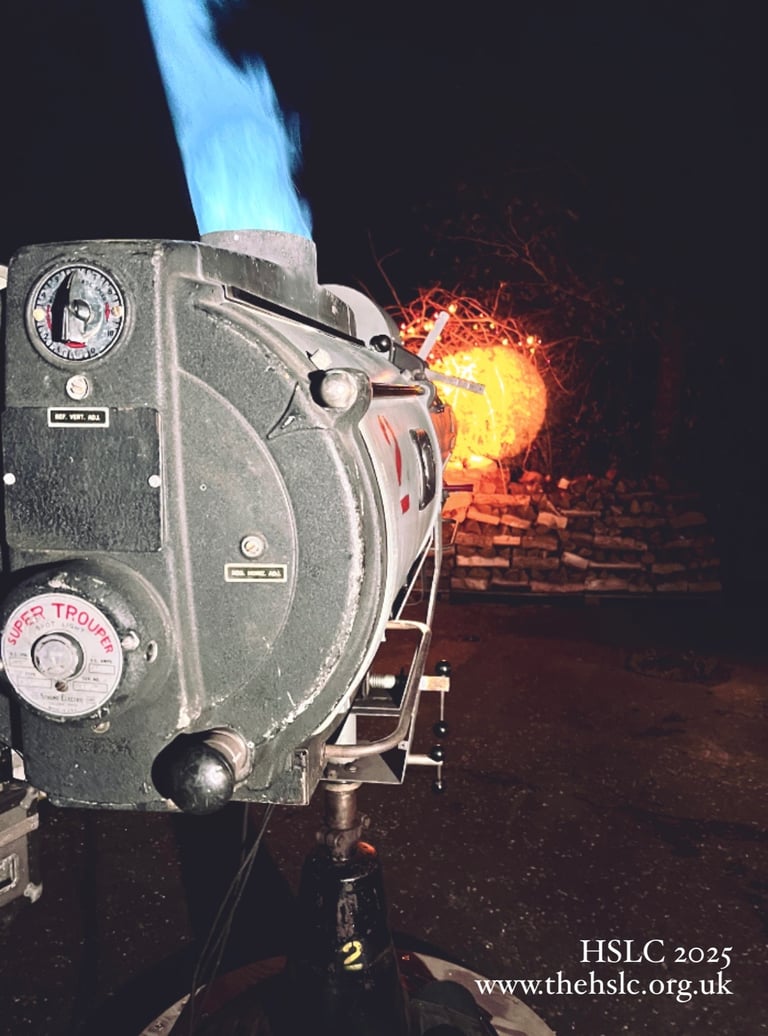
Figure 3 - View from behind the followspot looking towards the beam. HSLC collection.
Operators also evolved their own practical methods of sighting and cueing. One remembered technique was to drill a tiny hole in the outer casing of the lamphouse so that a small dot of light fell onto the wall above the booth opening. Pickup points, entrances, and cue marks could then be chalked directly onto the wall itself, giving the operator a quick visual reference during the show without having to take their attention fully away from the stage.
A Living Piece of Stagecraft History
This 1974 Super Trouper stands at a pivotal moment in stage lighting development — the final flourishing of carbon arc technology before xenon became the dominant high-intensity source.
Despite the introduction of xenon followspots in 1971, carbon arc Super Troupers remained in regular service well into the early 1980s. Xenon lamps were initially expensive, and early power supplies were heavy and complex. Many venues, and many operators, continued to rely on the trusted carbon arc, valuing its intensity, colour quality, and the tactile control it demanded.
It represents not only Strong Electric’s engineering heritage but also the skill of the followspot operator, the unseen technician whose judgement and steady hand could elevate a performance from good to unforgettable.
In 1974, followspotting was not simply about keeping the beam on the performer.
It was about keeping the light itself alive.
This material is held in trust for study, demonstration, and future research.
About HSLC Collection Notes
HSLC Collection Notes record the history, use, and significance of objects in the collection. They bring together research, technical understanding, and practical knowledge to help preserve not only the artefacts themselves, but also the working methods and craft traditions connected with them.
Sources and Documentation
This article draws upon:
• Strong Electric Corporation product literature and technical documentation (1960s–1970s editions)
• Contemporary followspot operating manuals and service guides
• Surviving 1974 Super Trouper carbon arc followspot within the HSLC collection
• Electrical and carbon arc lamp technical reference material
• Practitioner testimony from former projectionists and followspot operators
• Historical industry reference material including Theatrecrafts
All photographs by Ian Lewis for the Historic Stage Lighting Collective © 2026.
Historic Stage Lighting Collective
Collection Note 02
Written and researched by Ian Lewis
for the Historic Stage Lighting Collective
First published: February 2026
© Historic Stage Lighting Collective, 2026
For further historical reference: www,theatrecrafts.com


