
Collection Note 01 — The Patt. 152 and the Post-war Strand Effects Projection Lineage
An exploration of the Patt. 152 and the post-war Strand effects projection lineage, placing the lantern within the wider story of scenic projection in British theatre. Drawing on surviving equipment, documentation, and practitioner knowledge, this note examines both the technology itself and the working traditions connected with its use, alongside its preservation within the HSLC collection.
EFFECTS PROJECTOR
© 2026 HSLC
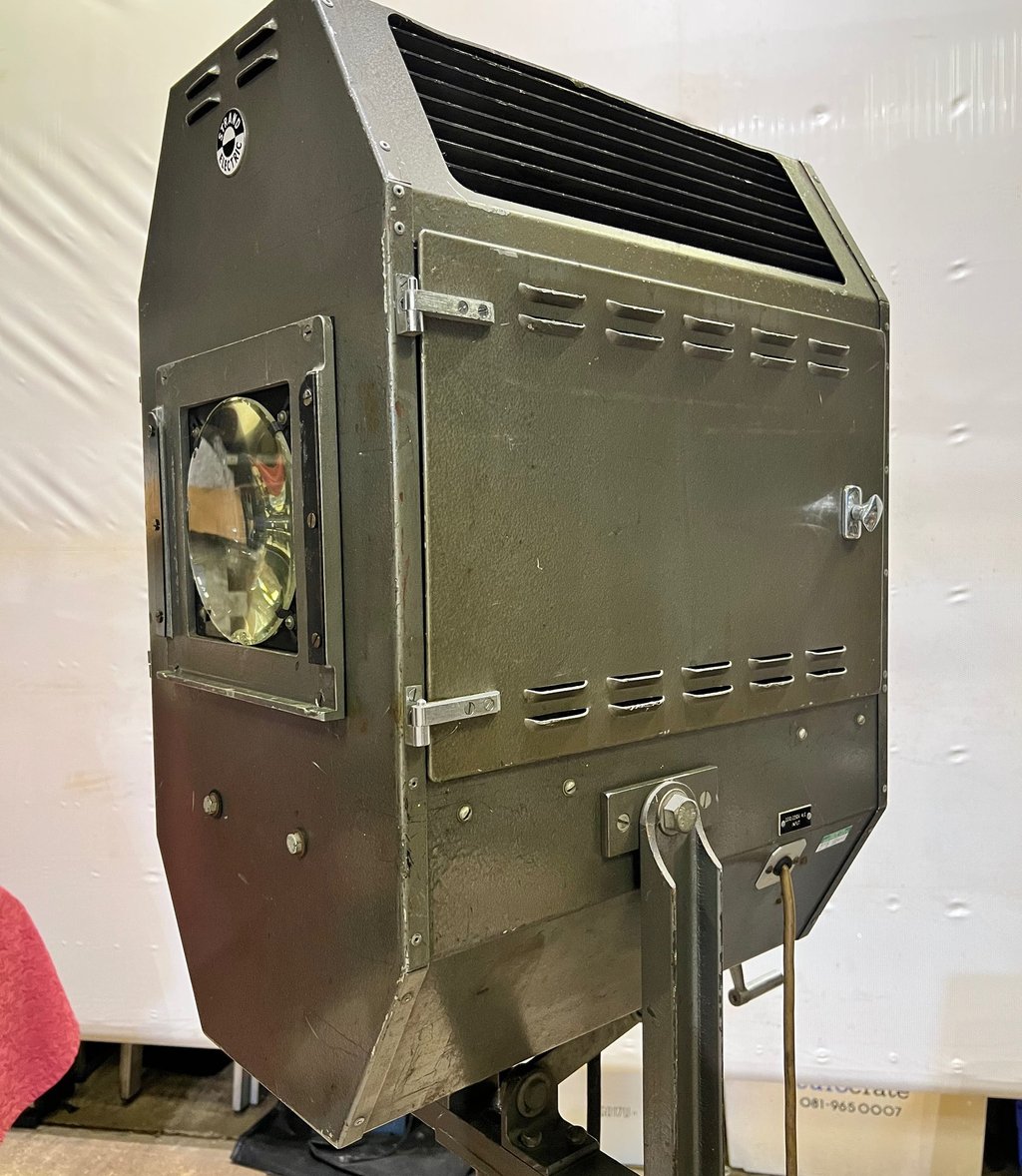
Figure 1. Strand Electric Patt. 152 scenic and effects projector (1959). Strand's flagship 4kW effects projector, used extensively in theatres, opera houses, and television studios throughout the second half of the twentieth century. HSLC Collection.
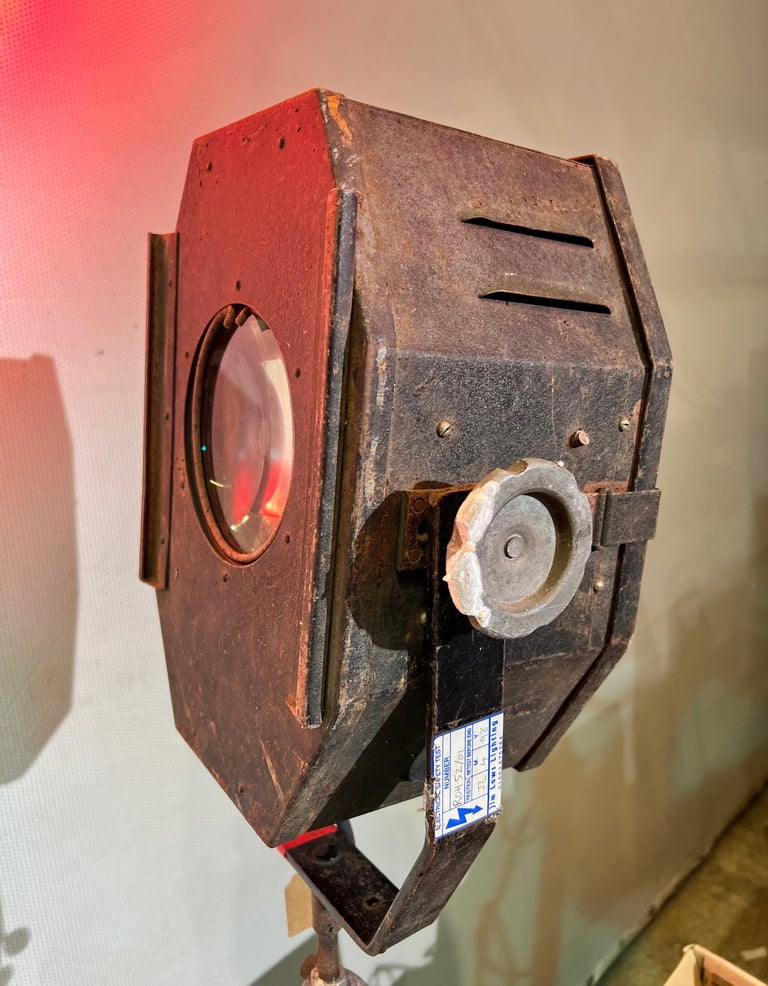
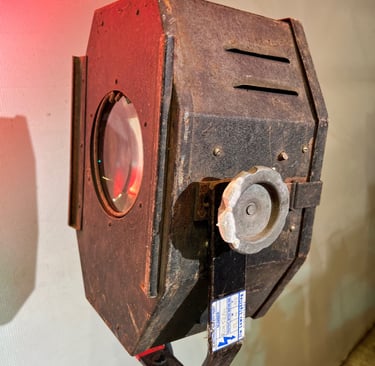
Figure 4. Foreshortened Royal Opera House Patt. 52 effects projector. HSLC Collection.
The Patt. 152 and the Post-war Strand Effects Projection Lineage
How we came to preserve an important part of Britain’s scenic and effects projection heritage
For much of the nineteenth century and throughout the twentieth, long before digital projection and moving lights reshaped the stage, atmospheric movement was created by a quieter, more analogue kind of magic. Within living memory, Strand Electric’s scenic and effects projectors — from early carbon arc lanterns to later high-power tungsten and tungsten-halogen machines — produced drifting clouds, rippling water, flickering fire, and textured motion that shaped the visual language of British theatre, opera, and television.
Several of these projectors evolved significantly during their production lives. HSLC documentation reflects both original design intent and later standardised practice, preserving not just the equipment itself but the thinking that shaped it.
Today, HSLC preserves the most complete surviving post-war lineage of Strand effects projectors anywhere in the UK. The collection includes the Patt. 51, Patt. 52, Patt. 152, Patt. 252, Patt. 752 and Cadenza EP, alongside the National Theatre’s entire effects disc archive. Our involvement began with a gift of a Patt. 152 from the Peter Bennett Collection, a projector originally rescued from the Royal Opera House, Covent Garden, by Bob Morgan, who had also helped clear the Covent Garden Optical Room before the last major refit. From that starting point, research revealed something much larger: a continuous chain of people, ideas, and equipment that HSLC now stewards as living heritage for the future.
Before the Patt. 152 — The Origins of Effects Projection
Strand Electric’s effects projection story begins in 1925 with the Patt. 33, a carbon arc effects projector designed to project rotating painted glass effects discs. These discs — often hand-painted and individually distinctive — created moving images of clouds, fire, water, rain, snow, and abstract textures, some tailored to specific shows.
It is widely understood that the standard projection format of rotating disc and front objective lens was established by Johann and Anton Kliegl — German-born immigrants who founded the Kliegl Brothers Universal Electric Stage Lighting Company in New York City in 1896 — prior to the First World War. That arrangement became a de facto worldwide standard and remained substantially unchanged for over a century.
The earliest effects discs were painted mica driven by clockwork; later examples adopted electric motors, and by the end of the analogue period some were DMX speed controlled. Eddie Biddle, Strand’s specialist in effects discs, devised many bespoke examples. HSLC holds clockwork discs and glass effects from the Peter Bennett Collection, illustrating the continuity of this specialist craft.
Although HSLC does not hold the earliest carbon arc projectors, it preserves the complete post-war evolution that followed them. These later projectors shaped the working lives of designers, operators, and technicians across theatres and studios for decades. The collection also includes working carbon arcs that demonstrate the light source that preceded tungsten-halogen — effectively the CSI or HMI of its day. It was this period that defined the mature language of scenic and atmospheric projection in British performance spaces.
The Patt. 52 — The First Modern Effects Projector
Although Strand’s earlier Patt. 51 had established the basic tungsten optical effects projector by the mid-1930s, it was the post-war Patt. 52 that became the first fully established model in the later lineage. With its 1 kW tungsten projector lamp and condenser-based optical system, it offered a practical and reliable way of projecting rotating effects discs to suggest clouds, fire, water and other scenic movement.
The Patt. 52 became a familiar presence in repertory theatres and early television studios, where it was often worked by technicians who understood its character intimately. Its effects were rarely meant to shout for attention. Instead, through careful adjustment of disc speed, focus and masking plates, operators used it to introduce atmosphere, texture and gentle movement into a scene, often in ways an audience might feel more than consciously notice. Strand also supplied specific show discs for hire, including fireworks, small trees for cycling scenes, and aircraft, reminding us that these projectors formed part of a practical, imaginative and highly skilled stagecraft.
Alongside the better-known rotating effects discs, theatres also used ingenious wave-effect attachments, first housed in simple wooden boxes and powered by clockwork, to animate light through textured glass placed in front of a photographic slide.
The HSLC collection includes a clockwork wooden example by Furse of Nottingham, complete with a slide showing seas in the Bay of Biscay in 1911. This rare early survivor, donated by Peter Bennett, demonstrates how movement between three textured glass elements on staggered cam rise-and-falls could create the broken shimmer of water or a travelling ripple across a cyclorama or ground row. Modest in appearance, such devices remind us that the world of effects projection was never only about the projector body itself, but also about the attachments, mechanisms, and the quiet skill of the technician using them.
HSLC preserves examples of the Patt. 52 as part of this post-war lineage, including a foreshortened Royal Opera House variant used for fireplace effects and other confined scenic spaces.
The Patt. 152 — Strand’s 4 kW Flagship
Introduced in 1959, the Strand Patt. 152 was a true powerhouse: a 4 kW high-intensity scenic and effects projector designed for opera houses, large theatres, and the rapidly expanding world of television production.
It employed:
• a 4 kW non-halogen tungsten incandescent tubular projection lamp
• a G38 lamp holder
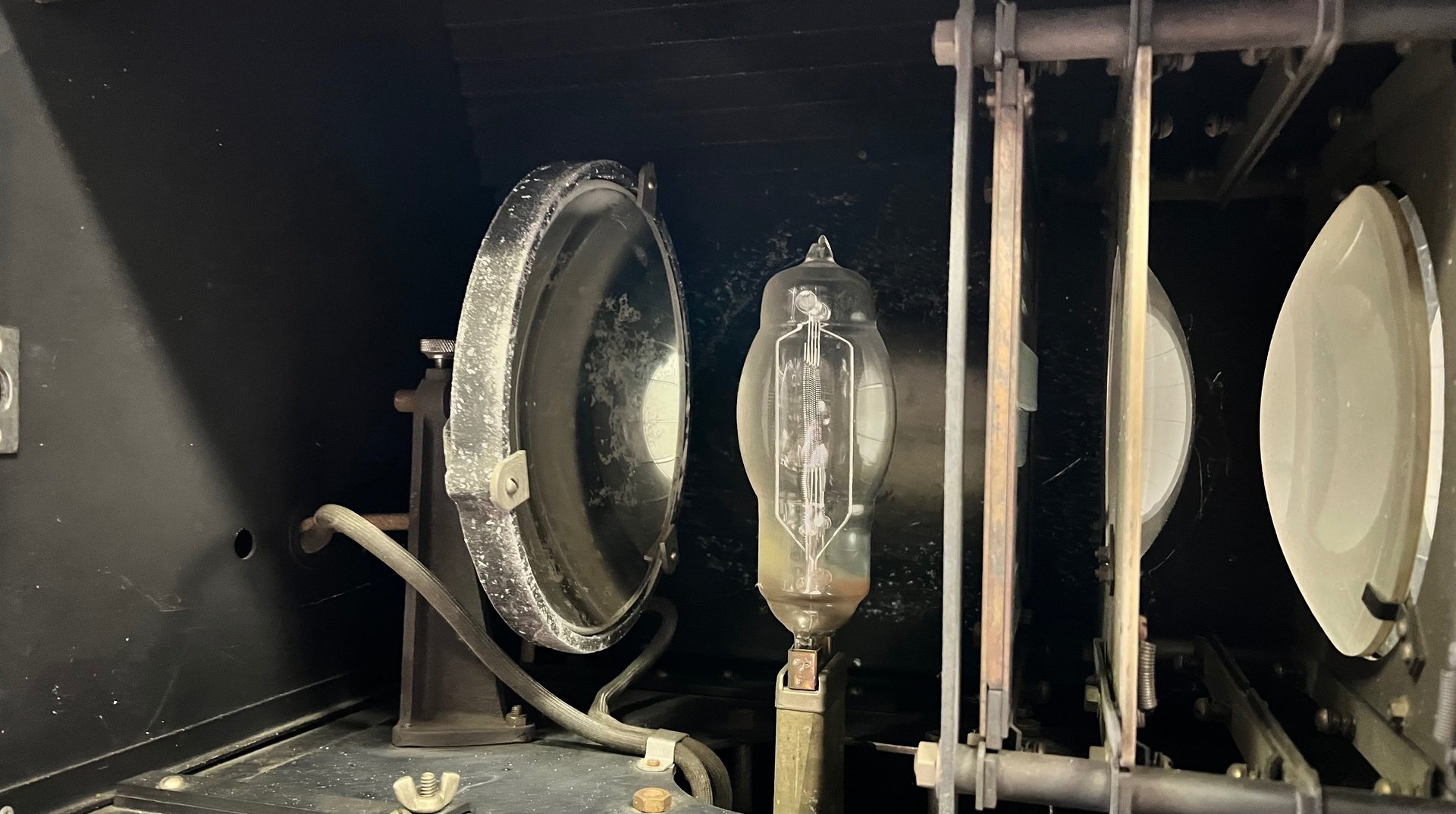
• a four-element condenser system
• a 7-inch spherical glass reflector
• two layers of heat-absorbing glass
• forced internal cooling
Lamp Voltage and Later Conversions
The original 4 kW tubular projection lamp used in the Patt. 152 was a 110-volt non-halogen tungsten lamp. Because of this low operating voltage, each projector required a dedicated transformer as part of its installation. In UK theatres, this transformer was external to the projector and typically housed in dimmer rooms or plant areas as part of the building’s fixed electrical infrastructure.
When a 5 kW 240-volt tungsten-halogen tubular lamp later became available, many Patt. 152 projectors were converted from the original 4 kW 110-volt system to the newer 5 kW 240-volt lamp. This eliminated the need for a separate transformer and extended the operational life of the projector in theatres and studios.
The Patt. 152 was not simply brighter than its predecessors — it had presence. Operators recall the heat load it generated, the steady mechanical hum of its cooling system, and the discipline required to manage a concentrated 4 kW beam safely across large scenic surfaces.
Strand documentation distinguishes between the stand-mounted Patt. 152 and the hanging Patt. 152/H variant. Both share identical optical and lamp systems, differing only in mounting hardware and intended installation.
Effects projectors such as the Patt. 152 were used extensively by the National Theatre during its Old Vic years (1963–1976) and continued into the early years of the South Bank building. Documented use also includes cyclorama projection at the Royal Opera House, where the Patt. 152 was employed in major operatic productions, including The Midsummer Marriage.
HSLC preserves the Patt. 152 as a central object within the collection and a key reference point in British stage-lighting history.
The Patt. 252 — Flexibility, Standardisation, and a Transitional Design
Introduced in the mid-1960s, the Patt. 252 occupies a pivotal position in Strand Electric’s effects-projection lineage. While it is often described retrospectively as a compact 2 kW successor to the Patt. 152, contemporary Strand documentation reveals a more nuanced intent.
Early Strand catalogues (1965–66) present the Patt. 252 as a flexible effects projector capable of operating at 1000 W, 1500 W, or 2000 W, depending on voltage, installation, and application. In this form, it replaced the earlier Patt. 52 and was intended to serve theatres and studios that required atmospheric projection but did not need — or could not accommodate — a 4 kW unit.
Strand’s 1965–66 catalogue lists multiple lamp options based on non-halogen tungsten incandescent technology, including:
• 1000 W lamps (Class A1/188 and equivalents)
• 1500 W lamps (voltage-dependent)
• 2000 W lamps (Class A1/218 and equivalents)
These lamps used large prefocus holders and were supported by a three-element condenser system with substantial heat-absorbing glass in an expansion frame to protect projected images. By the early 1970s, professional practice had largely converged on 2000 W operation using either A1/218 tungsten lamps or CP/53 tungsten-halogen lamps with P40s prefocus bases.
Later Rank Strand datasheets reflect this standardised 2 kW usage. HSLC documentation preserves evidence of both operational phases.
Objective Lenses and Optical Practice
Effects projectors such as the Patt. 252 employed interchangeable objective lenses mounted at the front of the effects attachment.
Strand supplied:
• Standard lenses: 2½ in. (65 mm), 3 in. (75 mm), 4 in. (100 mm)
• High-definition Dallmeyer lenses: 4 in. (100 mm) and 6 in. (150 mm), both f/1.9
These lenses were shared across multiple models. HSLC preserves original examples from the National Theatre.
Surviving examples in the wider sector suggest that Strand may also have produced intermediate focal-length lenses — including 3½", 4½", and 5½" variants — during the 1950s and 1960s. These do not appear in known Strand catalogues, indicating that they may have been produced for specific venues or production requirements. HSLC continues to investigate these variations as part of its ongoing optical research.
Standard UK Slide Sizes and the Patt. 752
The standard UK slide size for scenic projection in this period was 3¼” × 3¼”, with the US equivalent being 3¼” × 4”. These sizes were used across the Patt. 52, Patt. 152, and Patt. 252 families.
For larger scenic slides up to 7” × 7”, Strand produced the Patt. 752, a high-power projector designed specifically to handle these oversized formats, enabling large-scale scenic projection across expansive cycloramas and backcloths.
Broadcast Divergence — The BBC Variant
A small number of Patt. 252 projectors were produced for the BBC, employing:
• a 1 kW CSI daylight-balanced discharge lamp
• a five-element condenser system
• external control gear
These units document a divergence driven by broadcast lighting requirements.
The Patt. 202 — Miniature Effects Projection Beyond the Main Stage
Although not part of HSLC’s collection, the Patt. 202 deserves mention. Strand literature describes it as a 250-watt mini-effects projector with a built-in transformer for a 24-volt tungsten-halogen lamp.
It reused the external lamphouse form of the Strand Patt. 23 but replaced the optical system with a purpose-designed miniature assembly and compact motorised effects mechanism.
It produced miniature moving effects — clouds, flames, colour textures — and reflects Strand’s practice of re-engineering proven mechanical forms for new applications. Its compact, self-contained design made it suitable not only for smaller theatres but also for exhibition work, retail window displays, discotheques, and architectural or promotional installations.
The Cadenza EP — Passive Refinement
Introduced in 1985, the Cadenza EP marked a move into the tungsten-halogen era. It combined a halogen light source with improved optical efficiency and refined mechanical design without forced cooling. The unit is passively cooled and naturally quiet in operation, with only the effects motor audible.
The Toccata EP — The Final Analogue Effects Projector
Introduced in 1996, the Toccata EP formed part of Strand’s Toccata range, which was engineered around a 2.5 kW design capacity. In practice, the effects projector was commonly operated at 2 kW, depending on installation and lamp specification. Unlike the passively cooled Cadenza EP, the Toccata EP incorporated forced-air cooling to manage its higher thermal envelope.
Retaining the established disc-based projection format, the Toccata EP represents the final analogue scenic and effects projector produced by Strand — concluding a lineage that began with carbon arc projection in 1925.
The National Theatre Donation (2025)
In 2025, the National Theatre donated its entire retired archive of effects projection equipment to HSLC, including discs, motors, optics, lenses, condenser sets, and accessories.
These were working tools used by generations of operators. Some discs still carry fingerprints of those who painted and operated them.
This donation forms a direct line of continuity from Strand Electric to the National Theatre and now to HSLC. It helps preserve not only the equipment itself, but also the craft and working knowledge connected with it.
HSLC — A Living Archive of British Stage Lighting
HSLC now preserves:
• the complete post-war Strand effects-projection lineage
• the National Theatre’s entire effects-disc retired archive
• hundreds of lanterns, dimmers, motors, and accessories
Taken together, the collection represents a continuous record of British scenic projection practice across the second half of the twentieth century.
The Patt. 152 remains the central object within that narrative — not simply as a powerful projector, but as a focal point in the evolution of infrastructure, lamp technology, and operator craft.
This material is held in trust for study, demonstration, and future research.
About HSLC Collection Notes
HSLC Collection Notes record the history, use, and significance of objects in the collection. They bring together research, technical understanding, and practical knowledge to help preserve not only the artefacts themselves, but also the working methods and craft traditions connected with them.
Sources and Documentation
This article draws upon:
Strand Electric catalogues (1930s–1990s editions)
Rank Strand technical datasheets
Surviving equipment and documentation within the HSLC collection
The National Theatre technical archive (transferred to HSLC, 2025)
Practitioner testimony from former operators, technicians and industry specialists with direct experience of Strand scenic and effects projectors.
All photographs by Ian Lewis for the Historic Stage Lighting Collective © 2026
Historic Stage Lighting Collective
Collection Note 01
Written and researched by Ian Lewis
for the Historic Stage Lighting Collective
First published: February 2026
Revised and illustrated edition: May 2026
© Historic Stage Lighting Collective, 2026
For further historical reference: www.theatrecrafts.com

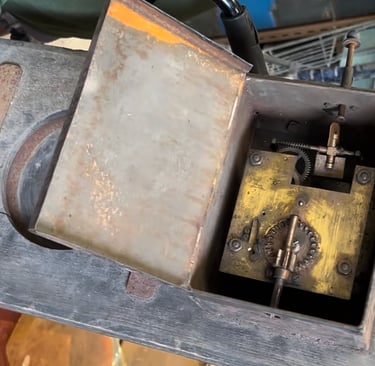
Figure 2. Clockwork wave-effect attachment by Furse of Nottingham. The internal clockwork drive mechanism and gear train used to animate the effect. HSLC Collection.
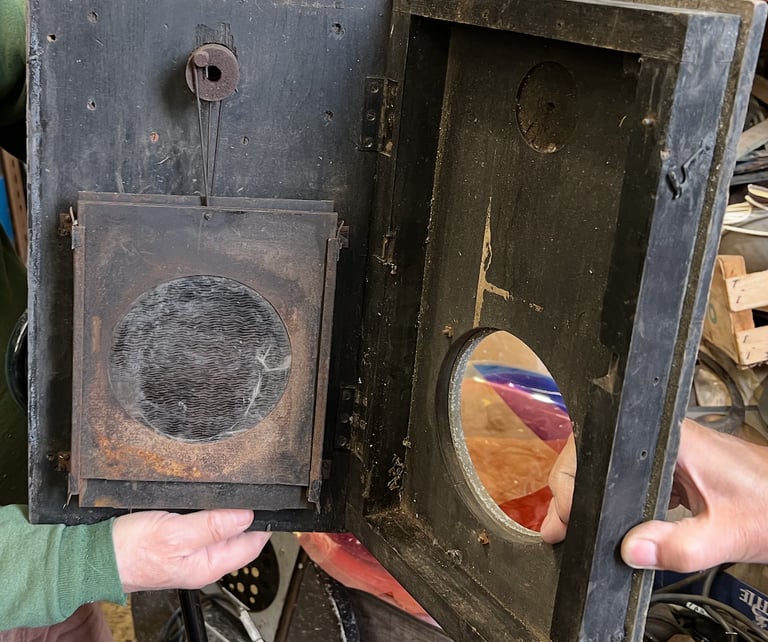
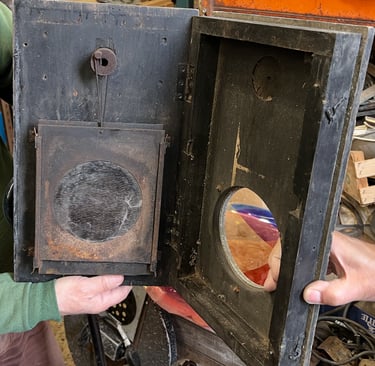
Figure 3. The interior of the wooden housing showing the textured glass assembly used to create moving water and ripple effects when projected through a photographic slide. HSLC Collection.


